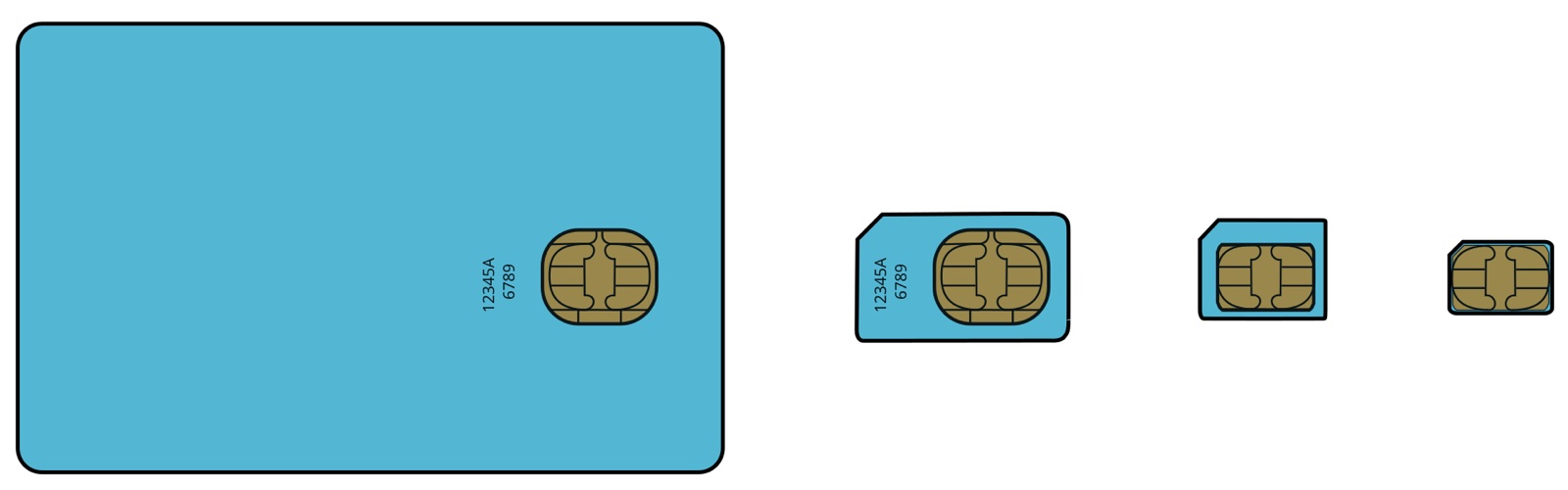
The SIM identifies and authenticates a subscription. It is not the radio modem, antenna, coverage map or complete phone number database.
Why GSM needed portable identity
Digital cellular standards needed a secure way to associate a user with authorised service. GSM's Subscriber Identity Module stored information used by a mobile device and network to recognise a subscription and perform authentication. Because the module could be removed, a subscriber could place it in another compatible, unlocked handset and carry service credentials with it.
This was not the only imaginable design. Other cellular ecosystems historically used different relationships between network, device and subscriber. The removable SIM became especially visible because it made the separation physical: the phone was one object and the subscription another.
A secure computer in miniature
A SIM is an integrated circuit with processing and protected storage, not merely a passive label. It holds an international mobile subscriber identity and participates in cryptographic authentication. Sensitive secret material is designed not to be exposed directly during ordinary operation; the network issues a challenge and the module helps calculate a response.
The SIM can also store limited records and applications depending on generation and implementation. Early users often associated it with a small phonebook or text storage, but these visible functions are secondary to network identity and security.
The chip stayed; the carrier shrank
The earliest full-size SIM format resembled a bank card. The mini-SIM cut away most of that carrier and became the familiar plug-in card of the GSM era. Micro-SIM and nano-SIM reduced the surrounding plastic further as manufacturers competed for internal space.
These names refer to physical form factors, not progressively stronger networks. Cutting a card could damage it or create fit problems, while adapters could catch in a slot. Proper replacement from a provider remained safer than treating the card as ordinary plastic.
eSIM changes provisioning
An embedded SIM uses a secure element built into a device and supports profiles that can be provisioned under established specifications. The historical continuity is important: “embedded” does not remove the subscriber identity function. It changes how the module is packaged and how operator credentials are loaded.
eSIM can enable multiple stored profiles and remove the need for a physical tray, but support depends on device, operator, market and service type. Moving service may require a transfer process or a new activation credential. Convenience and portability therefore depend on implementation, not on the word eSIM alone.
What the SIM does not decide
A compatible SIM cannot give an unsupported phone the required radio bands. It does not create coverage, guarantee speed or unlock a device. The phone's modem and software, the network's technology and local radio conditions still matter. Likewise, replacing a SIM does not automatically transfer photographs, applications or every contact.
The SIM's historical importance is narrower and deeper. It made subscriber credentials modular. That architectural separation survived changes in card size and now continues through remote provisioning.