The smartphone emerged from the convergence of telephone, computer, camera, media player, navigator and network service.
Digital phones learned new tricks
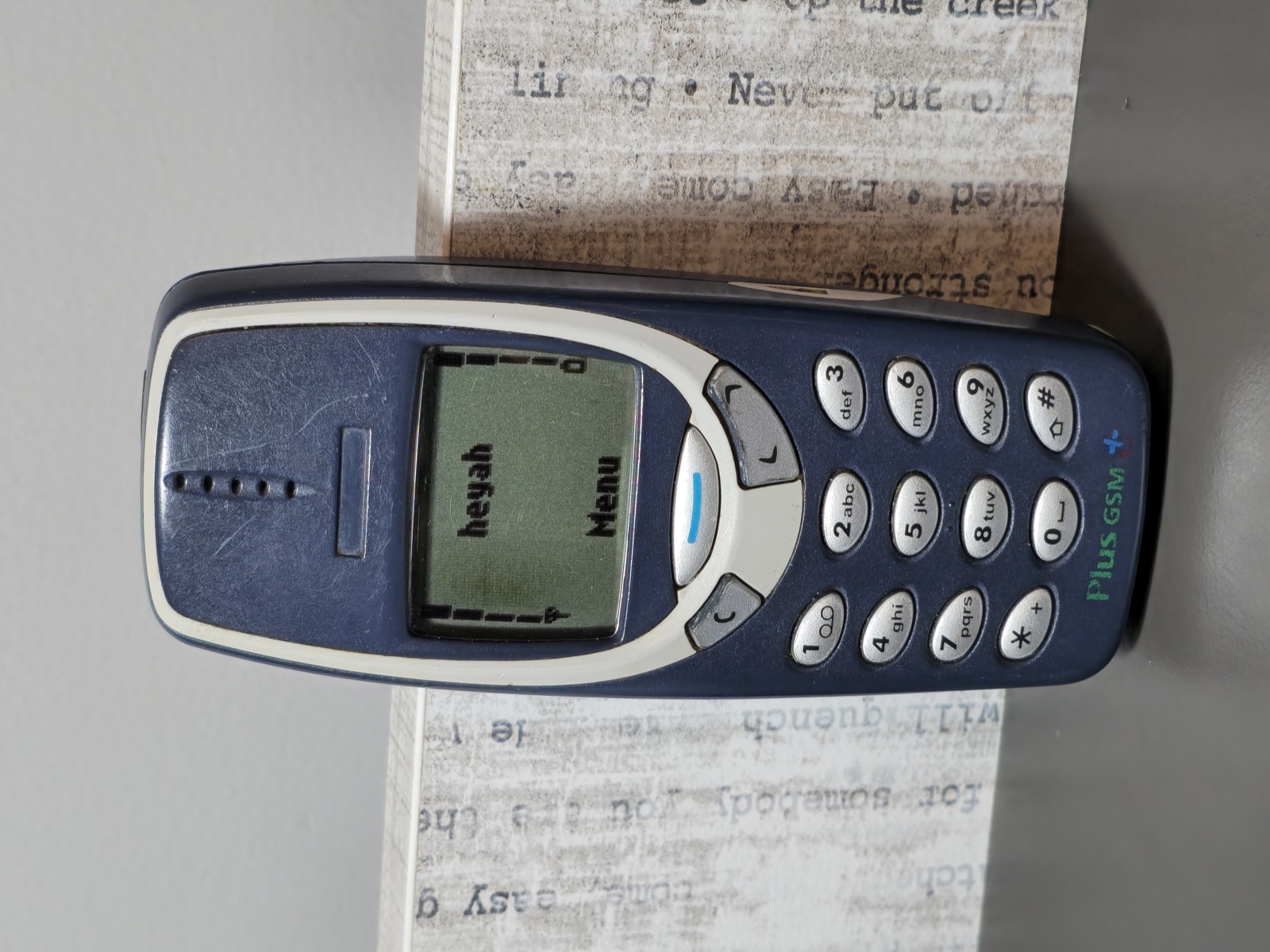
Second-generation mobile systems made digital voice and messaging widely important. Handsets developed address books, alarms, calendars, games and customisable interfaces. Devices such as the Nokia 3310 represent an era when the phone was already a personal digital object but remained organised primarily around calling and text messaging.
Miniaturisation improved battery life and portability. Predictive text accelerated input on numeric keypads, while monochrome and later colour displays carried menus rather than simply showing a dialled number. These changes formed user habits that smartphone interfaces inherited.
Phone meets organiser
Products in the 1990s and early 2000s explored combinations of cellular calling, email, personal information management and limited web access. IBM's Simon is often cited as an early device combining telephony with touchscreen computing functions. Communicators, PDAs and BlackBerry devices developed other models around keyboards, messaging and enterprise service.
Calling these devices early smartphones is useful if it does not imply a single direct lineage. They differed in market, network, software openness and interaction. The category formed gradually around converging capabilities.
The screen becomes the interface
Large capacitive touchscreens and software designed for direct manipulation changed the handset's physical organisation. A display could become keyboard, map, camera viewfinder or game controller. The device no longer required a permanent button for every function.
Application stores made distribution as important as hardware. Developers could add services after purchase, while operating-system owners established rules, security models and commercial terms. The phone became a platform governed by an ecosystem.
A pocket terminal for remote systems
Faster mobile data, Wi-Fi, cloud storage and web services moved much of the phone's value beyond the phone itself. Navigation depends on satellites, maps and servers; messaging depends on accounts and networks; streaming depends on remote catalogues. Even a powerful handset becomes limited when services end or connectivity disappears.
Voice also changed position. Calls still matter, but many are carried through digital and packet-based systems alongside other data. The telephone function survives inside a much broader network computer.
Convenience creates new dependencies
A smartphone concentrates identity, payment, location, private communication and access credentials. That creates extraordinary utility and a larger security surface. Software support, repairability, battery condition, account recovery and data governance now belong to the history of the telephone.
The modern object therefore closes no story. It renews the old relationship between terminal and infrastructure. The handset appears personal, but its operation depends on standards, networks, platforms and institutions distributed around the world.