Guide 02 · four related objects
The handset is not the subscription.
Everyday language calls the whole arrangement “my phone.” Technically it combines hardware, subscriber credentials, a reachable number, an operator relationship and personal data.
The handset
The physical telephone contains display, battery, processor, radio modem, antennas, microphones, cameras and storage. A mobile equipment identity such as an IMEI identifies equipment to relevant network systems; it is not the same as the subscriber's phone number. Changing the handset can preserve the subscription if credentials are moved or reprovisioned.
The SIM or eSIM profile
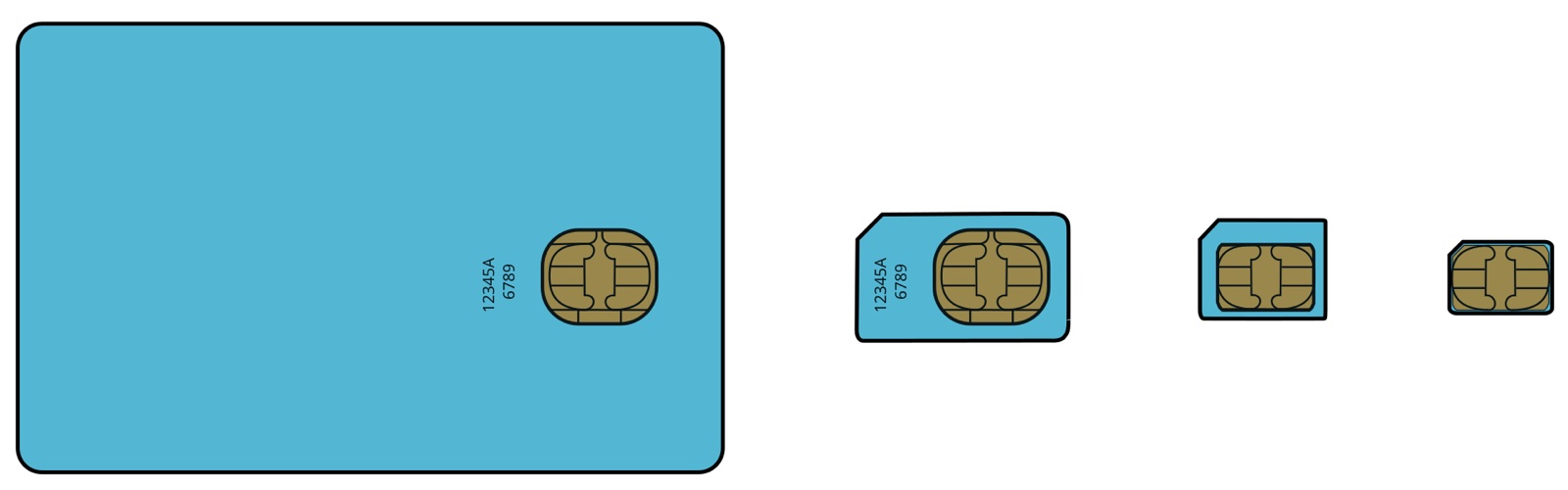
The Subscriber Identity Module provides a secure relationship between device and subscription. It contains an international mobile subscriber identity and supports authentication. A removable SIM makes the separation tangible; an eSIM profile performs related functions on an embedded secure element.
Moving a physical SIM does not automatically copy every photograph, application or message. Those may live in device storage, a memory card or cloud account. Conversely, erasing a phone does not necessarily cancel the operator subscription.
The telephone number
A number is a public routing address through which others reach a service. It is associated with the subscription by operator systems but is not simply “stored inside the plastic” in the everyday sense. Number portability can move that reachable address to another provider while other identifiers and credentials change.
The operator account
The commercial relationship includes tariff, balance or billing, customer record and service state. Replacing a damaged SIM may preserve the account and number after verification. Cancelling an account can end service even if the physical card remains intact.
The app or platform account
Messaging and cloud services add another identity layer. A service may use a phone number for registration yet maintain its own account, keys and backups. Moving the SIM is not proof that every app account has transferred securely; recovery and multi-factor settings must be managed separately.
A practical thought experiment
- New phone, same SIM: hardware changes; subscription may remain.
- New SIM replacement: secure module changes; number and account may remain.
- Port the number: provider and subscription credentials change; routing address remains.
- Factory-reset the phone: local data and settings change; network account may remain active.